Why this matters
LNG is stored and handled at around -162 degC, with safety margin pushing test temperatures to -196 degC (the boiling point of liquid nitrogen). At these temperatures, ordinary carbon steel and even 3.5% nickel steel become brittle. The industry standard for cryogenic LNG piping, plate and fittings is the 9% nickel steel family, codified in ASTM A553 Type I (plate), ASTM A333 Grade 8 (pipe) and ASTM A420 WPL8 (fittings).
Key technical facts
ASTM A553 Type I (9% nickel steel plate) typical chemistry and mechanical envelope:
| Property | Value |
|---|---|
| Carbon (C) | 0.13 max |
| Manganese (Mn) | 0.90 max (heat) |
| Phosphorus (P) | 0.015 max |
| Sulfur (S) | 0.015 max |
| Silicon (Si) | 0.15-0.40 (heat) |
| Nickel (Ni) | 8.50-9.50 (heat) |
| Tensile strength | Approx. 690-825 MPa |
| Yield strength | 585 MPa minimum |
| Elongation in 200 mm | 18% minimum |
| Test temperature | Down to -196 degC |
ASTM A553 Type I is supplied in the double-normalized and tempered or quench-and-tempered condition. The matching pipe specification is ASTM A333 Grade 8 (also a 9% Ni steel) and the matching buttweld fittings are ASTM A420 Grade WPL8.
Decision matrix
| Minimum design temperature | Pipe / fitting / flange family |
|---|---|
| -46 degC | A333 Gr 6 / A420 WPL6 / A350 LF2 |
| -101 degC | A333 Gr 3 / A420 WPL3 / A350 LF3 |
| -196 degC (LNG) | A333 Gr 8 / A420 WPL8 / A553 Type I (plate) / A522 forgings |
| Below -196 degC | Move to austenitic stainless or aluminium alloys |
Common procurement mistakes
- Confusing A553 (plate) with A333 (pipe) and A420 (fittings). Each scope is different; an LNG package needs all three.
- Skipping the impact test at the low temperature. A553 Type I is normally tested at -196 degC; verify that on the MTC for every plate, pipe and fitting.
- Ignoring magnetic permeability. 9% Ni steel is ferromagnetic and is sometimes confused with austenitic alloys; check magnetic property requirements with your engineering contractor.
- Mismatched filler metal. Welding 9% Ni typically uses Inconel-type (ERNiCrMo) filler metals to maintain cryogenic toughness; do not weld with carbon steel filler.
- Forgetting the strict surface defect criteria. Cryogenic plates and forgings have tighter UT and surface defect requirements than ambient-service equivalents.
Buyer checklist
- Confirm ASTM A553 Type I, A333 Gr 8 or A420 WPL8 on the PO line, with the heat treatment condition (DNT or QT).
- Verify Charpy V-notch impact values at -196 degC on every MTC.
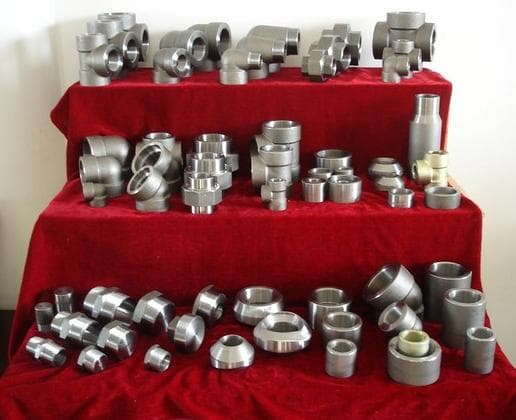
- For seamless butt-welding pipe fittings, confirm forging route, heat treatment cycle and the impact test on the broken Charpy specimens.
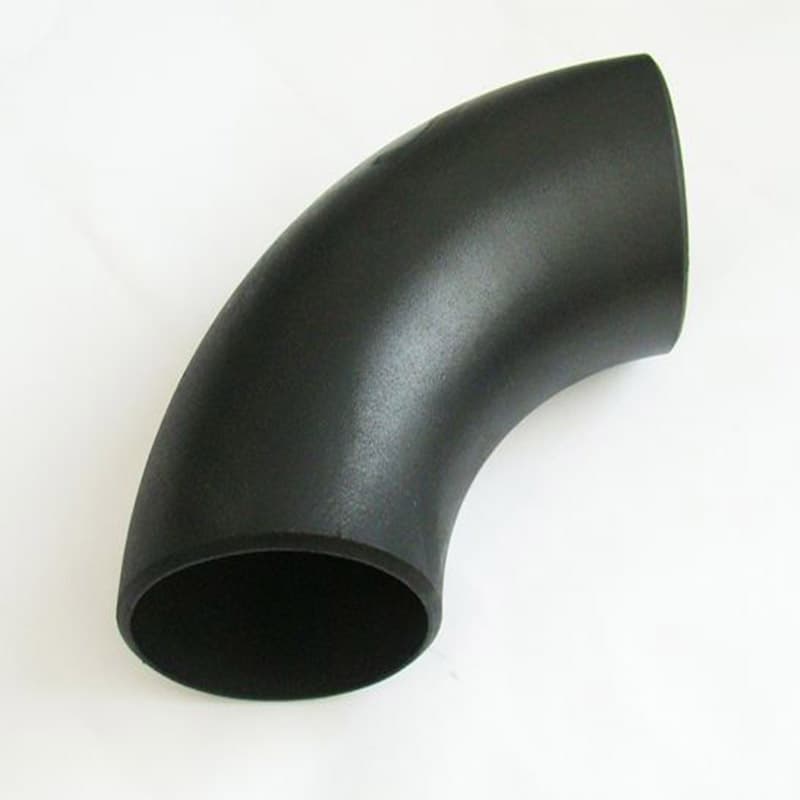
- For pipe bends, confirm post-bending heat treatment maintains 9% Ni cryogenic properties.
- For seamless steel pipes, confirm UT and surface inspection per supplementary requirements.
- Cross-reference our certificates for cryogenic project track record.
- Send your LNG enquiry through our inquiry form with full design temperature data.
Sources
- https://energy-steel.com/an-overview-of-astm-a553-type-i-9-ni-steel-plate/
- http://www.metalspiping.com/9-nickel-steel.html
- https://masteel.co.uk/news/9-nickel-steel-lng-cryogenic-applications/
Need a quote for the products mentioned in this article?
Submit your specs and our pressure piping team will respond within one business day.
Send RFQRelated reading
TechnicalMonel 400 and K-500 Pipe Fittings for Marine Saltwater Service
How to specify Monel 400 and Monel K-500 pipe fittings for seawater and marine service, including chemistry, pitting behaviour and procurement checklist.
Technical