Why this matters
The hydrostatic test is the contractual proof that a pressure-piping component holds without leaking at the design condition. ASME B31.3 — Process Piping is the most widely cited code for chemical, refining, and energy projects. Its requirements for hydrostatic testing are explicit on minimum pressure, hold time, gauge accuracy, and water quality. Buyers who witness a hydro without knowing the code allow short-cuts that would never pass a TPI audit. This guide walks through the hydrostatic test procedure for pipe fittings under ASME B31.3.
A disciplined hydrostatic test procedure for pipe fittings under ASME B31.3 catches every leak path before the line goes into service.
Step-by-step procedure
1. Calculate test pressure. Per ASME B31.3 para 345.4.2, hydrostatic test pressure is at least 1.5 × design pressure, with correction for temperature: P_T = 1.5 × P × (S_T / S), where S_T is the stress at test temperature and S is stress at design temperature, capped at the yield stress. For a typical 600# carbon steel system at 1480 psi design, the hydrotest is 2220 psi at room temperature.
2. Reduce only when necessary. ASME B31.3 allows the hydrostatic test pressure to be reduced to as low as 77% of the calculated value if a higher pressure would exceed the test pressure of an installed vessel that must be in the loop.
3. Prepare the test loop. Vent high points, drain low points, isolate equipment that cannot accept test pressure, blind-flange the boundaries. Calibrated pressure gauge with range 1.5–4× test pressure, calibration within the past 6 months.
4. Use clean water. For austenitic stainless, chloride content of test water shall be limited (typically ≤ 50 ppm) to prevent stress corrosion cracking. Drain promptly and dry the line after the test.
5. Pressurise in stages. Increase pressure gradually with an intermediate hold for a preliminary check at the lesser of half the test pressure or 170 kPa (25 psig). Inspect for visible leaks. Then ramp to test pressure.
6. Hold time. Maintain test pressure for a minimum of 10 minutes per ASME B31.3, then reduce to design pressure for visual inspection of every joint and component. In practice 30–60 minutes is common for fitting-level tests so leaks have time to manifest.
7. Acceptance criteria. No visible leak, no measurable pressure drop attributable to leakage. Apparent pressure drop from temperature change is calculated and excluded.
8. Report content. Test pressure, gauge serial + cal date, water quality, ambient temperature, hold duration, witness signatures, and any rework. Per ASME B31.3, a record of the test is required.
Common buyer mistakes
- Accepting a 1.3 × design test "because the supplier always does it that way" — the code minimum is 1.5 × design.
- Witnessing the test on the same gauge that was used to set the test pressure (no independent verification).
- Using untreated municipal water on stainless lines and seeing chloride pitting weeks later.
- Failing to hold long enough; small weep leaks may take 20–30 min to appear.
- Pneumatic test by default — ASME B31.3 prefers hydrostatic; pneumatic only when hydro is not feasible, with extra safety controls.
Buyer checklist
- [ ] Test pressure formula calculated and recorded
- [ ] Calibrated gauge, range 1.5–4× test pressure, cal cert dated < 6 months
- [ ] Independent verification gauge available
- [ ] Water chloride < 50 ppm for stainless
- [ ] Preliminary hold at 25 psig / half test pressure
- [ ] Minimum 10 min at full test pressure (longer recommended)
- [ ] Visual inspection at design pressure after hold
- [ ] Drain and dry stainless lines immediately
- [ ] Test record signed by buyer or TPI witness
Sample PO clause
"Each pressure-containing fitting shall be hydrostatically tested per ASME B31.3 para 345 at not less than 1.5 × the rated pressure of the fitting class, held minimum 10 minutes, with no visible leak. Water shall meet a chloride limit of 50 ppm maximum for austenitic stainless. Provide a test record naming gauge serial number, calibration date, water analysis, hold time, ambient temperature, and witness signatures."
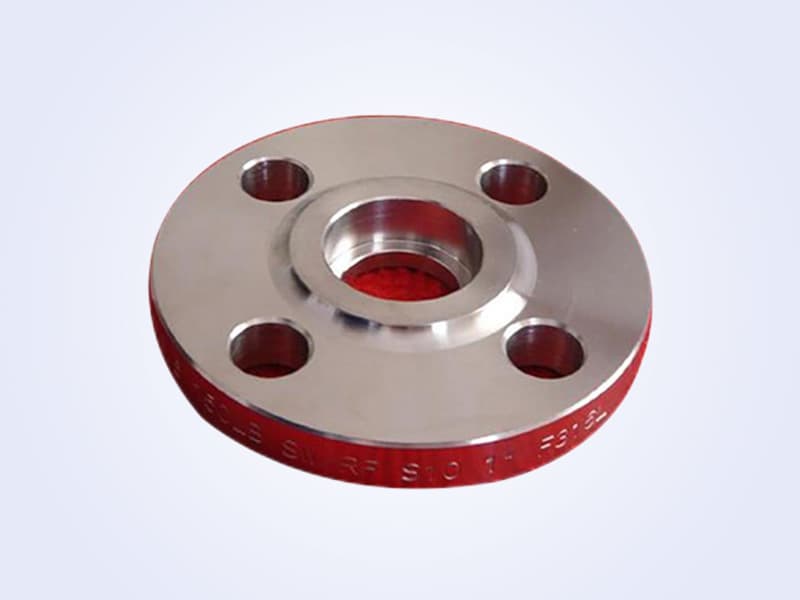
Our seamless butt-welding pipe fittings and forged flanges ship with hydro records cross-referenced to the heat number on the MTC. Submit a sample test pack request through the inquiry portal or browse witness reports in the certificates library.
Sources
- LANL ASME B31.3 process piping guide: https://engstandards.lanl.gov/esm/pressure_safety/Section%20REF-3-R0.pdf
- Piping World — ASME B31.3 leak testing overview: https://www.piping-world.com/asme-b31-3-leak-testing-requirements-overview
- EPCLand hydrostatic test guide: https://epcland.com/piping-hydrostatic-test-procedure-asme-b31-3/
- KLM Tech hydrostatic test standard: https://www.klmtechgroup.com/PDF/ess/PROJECT_STANDARDS_AND_SPECIFICATIONS_hydrostatic_pressure_testing_Rev01.pdf
- ASME Digital Collection — Process Piping (Becht): https://asmedigitalcollection.asme.org/ebooks/book/158/chapter/33226/Pressure-Testing
Need a quote for the products mentioned in this article?
Submit your specs and our pressure piping team will respond within one business day.
Send RFQRelated reading
Buyer guideMarking Standards MSS SP-25 Explained for Fitting Acceptance
MSS SP-25-2018 marking standard explained for pipe fitting and flange acceptance: required fields, marking methods, and a buyer audit checklist.
Buyer guide